
SOP: Daily Call Sheet Distribution
The call sheet is the single most important document in live entertainment operations, yet it is frequently treated as a clerical afterthought. Poor distribution leads to missed...
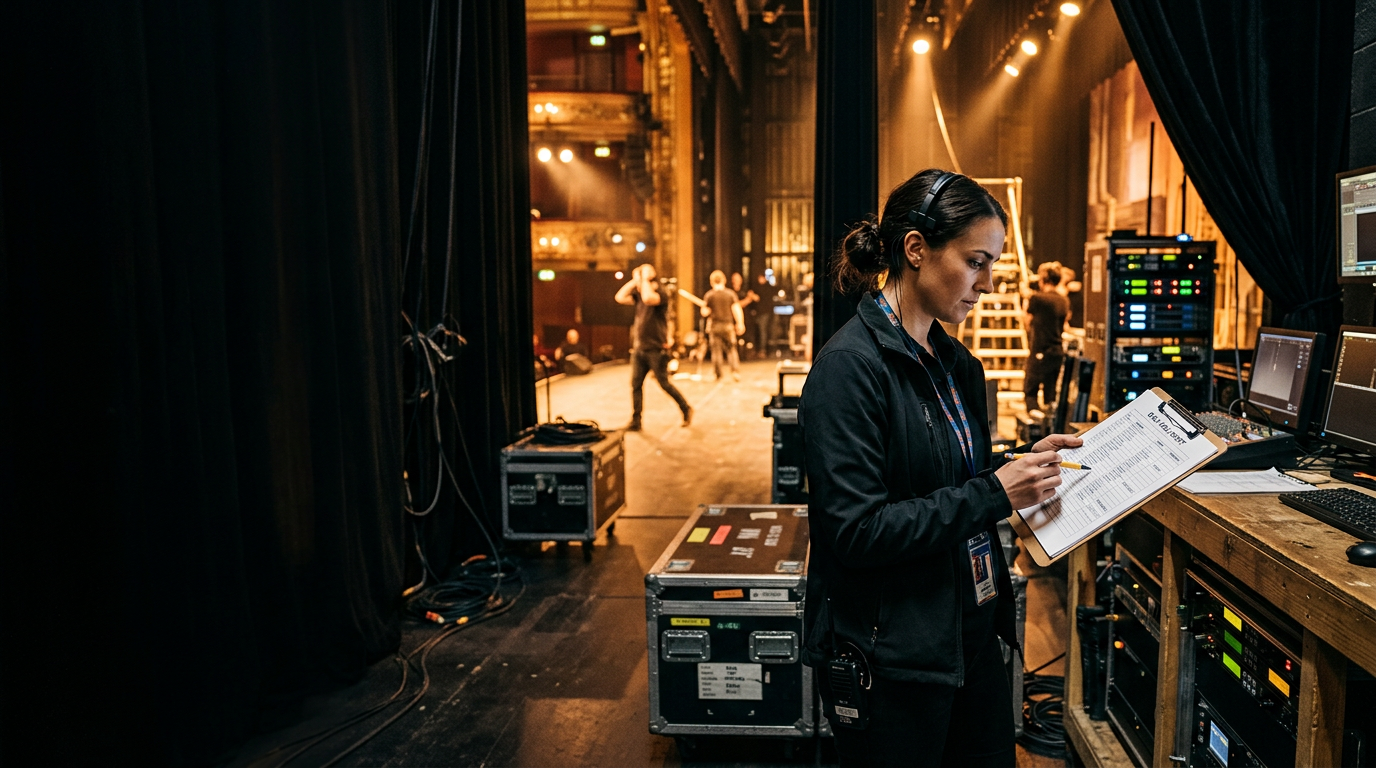
The call sheet is the single most important document in live entertainment operations, yet it is frequently treated as a clerical afterthought. Poor distribution leads to missed cues, overtime grievances, and safety lapses that jeopardize the production. This Standard Operating Procedure (SOP) provides a rigorous framework for stage managers and production leads to ensure every department and performer is synchronized for a successful show day.
The Logic of the Daily Call Sheet
The daily call sheet is not just a schedule; it is a legal and operational directive. In union environments, such as those governed by AEA, IATSE, or SAG-AFTRA, the call sheet serves as the official record of work hours and required rest periods.
A high-functioning call sheet must answer three questions instantly:
- When do I need to be there?
- Where exactly am I going?
- What is the priority of the day?
Operational failure usually stems from ambiguity. If an actor has to call the Stage Manager to clarify their fitting time, the call sheet has failed. To prevent this, the document must be the "Single Source of Truth." Any changes made after distribution must be communicated through a formal revision process, not just a verbal update.
Pre-Distribution Verification Checklist
Before hitting "send," the Stage Manager or Production Manager must run a verification audit. Distributing incorrect information is worse than a slightly delayed distribution because it erodes the company’s trust in the document.
The Five-Point Audit
- The Date and Version: Ensure the day of the week matches the calendar date. If this is a revision, it must be clearly labeled "v2" or "REVISED" in the header.
- Weather and Logistics: For touring shows or outdoor residencies, include the load-in-door weather forecast. Note any local transit interruptions or venue-specific access changes.
- The "In-Time" vs. "Ready-Time": Clearly distinguish between when a technician must badge into the building and when they must be on the floor ready for work.
- The Grid: Ensure the rehearsal or performance grid does not have overlapping room assignments for the same personnel.
- The Emergency Contact: Confirm that the on-site "Duty Manager" or "SM on Call" phone number is correct for that specific day.
When managing call times for large casts, the verification step should also include a "Conflict Scan." This involves cross-referencing the call sheet against pre-approved personal time off (PTO) or medical appointments to ensure no one is called during a sanctioned absence.
Structuring the Distribution Timeline
Timing is the most critical element of the call sheet SOP. If you send it too early, you risk needing multiple revisions as logistics change. If you send it too late, you violate "turnaround" rules and disrupt the personal lives of your company.
The "6:00 PM Rule"
In the professional theatre and touring industries, the standard deadline for the following day’s call sheet is 6:00 PM. This provides the cast and crew with enough notice to plan their morning while allowing the production office to finalize the daily schedule based on the progress of current rehearsals.
Sequence of Distribution
- Drafting: The Stage Management team meets at 4:30 PM to finalize the schedule.
- Stakeholder Review: A draft is sent to the Technical Director and Company Manager for a 15-minute "sanity check" to ensure crew calls and travel logistics are aligned.
- Final Blast: The sheet is distributed to the full company by 6:00 PM.
- Physical Posting: If working in a fixed venue, a physical copy is posted on the Call Board immediately after the digital blast.
Channels of Distribution and Redundancy
In a modern production environment, a single email is no longer sufficient. People check different platforms based on their roles and habits. To ensure 100% receipt, use a multi-channel approach.
Digital Distribution
Email remains the formal standard for the "SOP: Daily Call Sheet Distribution." However, for real-time engagement, use a dedicated production management app or a secure messaging channel like Slack or WhatsApp. When using these platforms, always upload the call sheet as a PDF. Never paste the schedule as text in a message, as formatting often breaks on mobile devices, leading to misinterpreted times.
Physical Distribution
Do not underestimate the importance of the physical Call Board. In the event of a local network outage or a lost phone, the physical board is a fail-safe.
- Place the new call sheet in a high-visibility, consistent location.
- Cross out the previous day’s sheet with a bold "VOID" or remove it entirely to prevent confusion.
- Use a highlighter to call out specific departmental changes or unusual calls (e.g., a 10:00 AM photo call before a 2:00 PM matinee).
Handling Revisions and Late Changes
Despite your best efforts, schedules change. A cast member falls ill, or a piece of automation requires an emergency morning inspection. How you handle these revisions determines the operational stability of the show.
The Revision Protocol
- The Recall: If a major change occurs, the first step is to issue an "Alert" message via the fastest channel (SMS or Push Notification) stating that a revised call sheet is coming.
- The Document: The revised PDF must have "REVISED" in the filename and a timestamp in the footer. Use a red font or "clouding" around the specific sections that have changed.
- The Acknowledgement: For changes made within 12 hours of a call, the Stage Manager must receive a verbal or text confirmation from every affected individual. Do not assume an email has been read at 11:00 PM for an 8:00 AM call.
For recurring performances, using a show call time template can significantly reduce errors during the revision process. By using a standardized layout, the company knows exactly where to look for changes, reducing the cognitive load on tired performers and technicians.
Department-Specific Instructions
A call sheet is often a "Master Document," but it should be segmented so that individuals can find their specific requirements quickly.
Wardrobe and Hair/Makeup (WHAM)
These departments often have staggered starts. Do not simply list "1:00 PM Call." Use a grid that identifies specific "Chair Times" for each performer. This prevents a bottleneck in the dressing rooms and ensures the crew is not sitting idle while waiting for the first actor.
Technical and Backstage Crew
Crew calls are often governed by different meal-break rules than the cast. The call sheet must explicitly list the "Meal Out" and "Meal In" times for the crew to ensure compliance with union contracts. If the crew is on a "continuous reset" or "rolling break," this must be noted in the departmental notes section.
Travel and Residency Logistics
For touring productions, the call sheet must include:
- Hotel departure times (Lobby Calls).
- Venue arrival times.
- The address of the venue and the specific stage door entrance to be used.
- Contact information for the local transport captain or venue liaison.
Accountability and Reporting
The final stage of the distribution SOP is tracking. If a team member is consistently "late for call," the first place a Production Manager looks is the distribution log.
Keep a record of when each call sheet was sent and to whom. Most modern production software provides "read receipts" or "open logs." Use these not for micromanagement, but to identify if certain departments are not receiving or engaging with the information. If the Audio department never opens the digital call sheet, they are likely relying on word-of-mouth, which is a significant risk factor for the production.
Closing the Loop
At the end of each production week, archive all call sheets in a secure digital folder. These documents are vital for resolving payroll disputes, verifying worker's compensation claims, and providing a historical record for future show mounting. They are the "black box" of your production's daily operations.
Moving Beyond Paper
The goal of this SOP is to create a rhythm that the company can rely on. When the call sheet is accurate, timely, and accessible, the cast and crew feel supported. This allows them to focus their energy on the creative performance rather than the logistics of their workday.
Where Rox Teddy Fits
Rox Teddy simplifies this process by automating the distribution of call sheets and tracking acknowledgments across large-scale entertainment operations. Our platform ensures that the right version of the schedule is always in the hands of the right personnel at the right time.
Effective distribution is the foundation of a disciplined and professional stage environment.