
SOP: Last-Minute Swing Substitutions
Managing the chaos of a lastminute cast change is a core competency of any highstakes production environment. This Standard Operating Procedure SOP provides a granular framework...
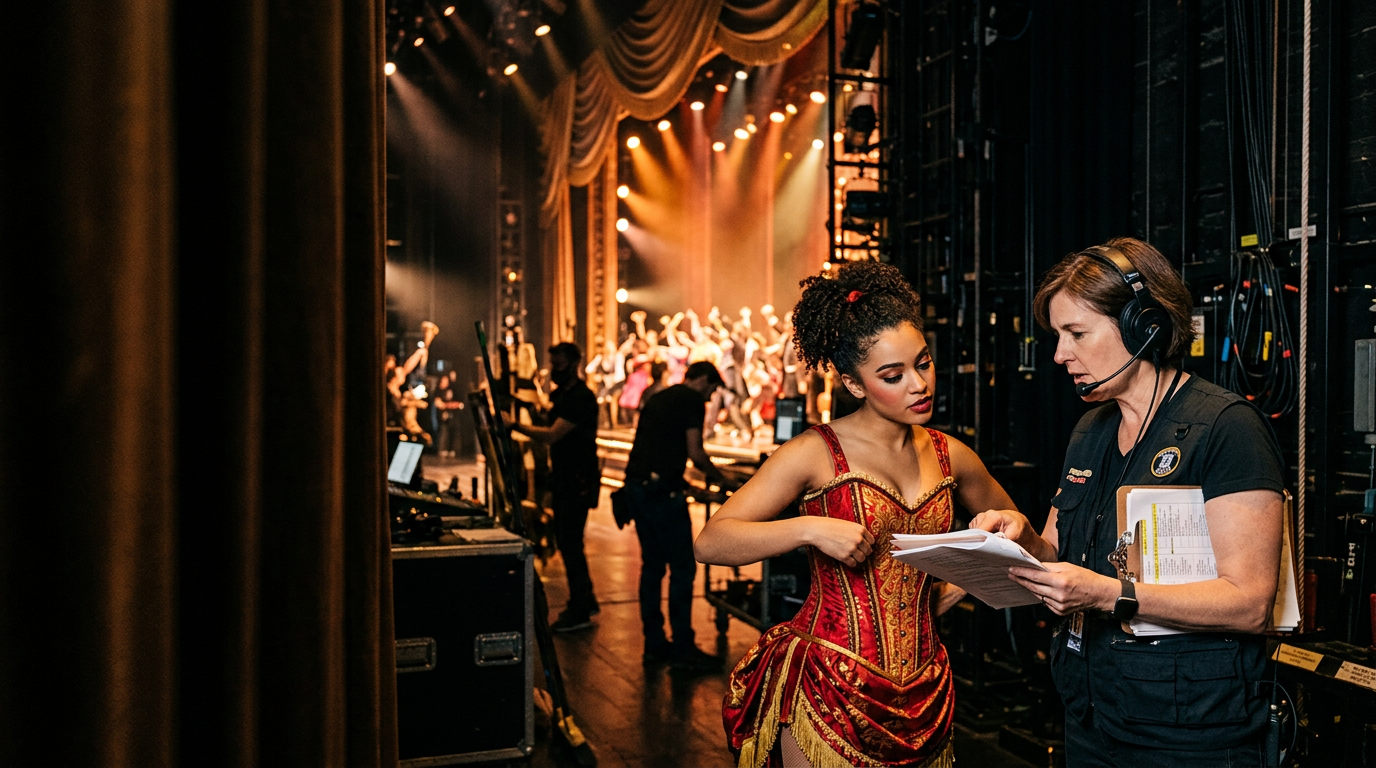
Managing the chaos of a last-minute cast change is a core competency of any high-stakes production environment. This Standard Operating Procedure (SOP) provides a granular framework for executing emergency swing substitutions with minimal downtime and maximum safety. By following these protocols, stage and production managers can move from panic to professional execution when a performer goes down minutes before the house opens.
Anatomy of the Emergency Substitution
An emergency substitution occurs when a principal or ensemble member becomes unavailable within two hours of curtain time. Unlike a planned coverage situation, the "swing-in" requires rapid mobilization of wardrobe, sound, and stage management departments. It is essential to understand what a swing performer does in this context: they are not just understudies, but technical specialists trained to slot into multiple tracks at a moment's notice.
The primary goal during an emergency shift is "Show Fit." You are not looking for a nuanced, artistic performance; you are looking for a safe, technically accurate execution of the track that protects the rest of the cast and the integrity of the automation cues.
The First Five Minutes: The Assessment Phase
When the call comes in that a performer cannot go on, the Stage Manager (SM) must immediately initiate the "Notification Chain." Do not wait for a formal diagnosis or a final decision. Move through these steps in order:
- Stop the Clock: If the house has not opened, hold the front-of-house (FOH) opening by five minutes to allow for an internal assessment.
- Verify Availability: Confirm the primary swing is on-site or within the contractual travel radius. If the primary swing is unavailable, move immediately to the "Split Track" protocol.
- Identify the Magnitude: Is this a single-track replacement, or a "swing-in-a-swing" situation? A "swing-in-a-swing" occurs when a swing is already covering one role and must be moved to another, necessitating a third person to cover the first swing’s original assignment.
- The "Go/No-Go" Decision: The SM and Company Manager (CM) must decide if the show can proceed safely. If three or more ensemble tracks are being "split" (parts of the role handled by different people), the risk of onstage collision increases.
Technical Department Integration
Once the substitution is confirmed, the technical departments must pivot. This is where most last-minute substitutions fail. A lack of communication here leads to mic frequency overlaps or wardrobe malfunctions mid-show.
Wardrobe and Hair/Makeup
The wardrobe supervisor must be notified the moment a swing is "green-lit." They need to pull the swing's specific "jump kit"—a pre-fitted set of costumes adjusted to the swing’s measurements.
- Action Rule: If a costume cannot be swapped in time, the swing performs in "blacks" (standard rehearsal attire) or a generic ensemble kit. Never force a performer into an ill-fitting costume that restricts movement or sightlines.
Audio and Sound
The A1 (Head of Audio) must load the swing's "EQ" profile into the console.
- Mic Swap: Ensure the swing is wearing their own designated transmitter/mic element. Never share elements between the sick performer and the swing to prevent the spread of illness and different perspiration levels affecting the gear.
- VCA Assignment: The SM must confirm the swing’s name is updated on the A1’s script to ensure cues are called to the correct person.
Automation and Props
If the role involves flying, heavy automation, or complex prop hand-offs, the SM must conduct a "Touch-Point Briefing." This is a 2-minute meeting at the specific locations on stage where the swing will interact with machinery.
The Split Track Protocol
In some instances, you may not have a dedicated swing for a specific role. This necessitates a "Split Track," where the responsibilities of the missing performer are divided among the remaining cast. This is the highest-risk maneuver in entertainment operations.
Follow these decision rules for splitting a track:
- The Safety First Rule: Remove any lifts, stunts, or complex weaponry choreography. If the person normally catching a flyer is absent, the stunt is cut. No exceptions.
- The Vocal Preservation Rule: Assign the missing performer's vocal lines to the strongest off-stage singer or the nearest ensemble member.
- The "Hole" Method: It is often safer to leave a "hole" in a dance formation than to have an unprepared performer try to learn a sequence in 15 minutes.
To prevent these scenarios before they happen, use our no-show risk reduction checklist during pre-production to ensure your redundancy plan is airtight.
Conducting the Emergency Put-In
If there are 30 to 60 minutes before curtain, the SM should conduct a "Modified Put-In." This is not a rehearsal; it is a safety check.
- Mark the Danger Zones: Walk the swing through any moments involving trap doors, moving scenery, or pyrotechnics.
- Key Interaction Check: If the role has a romantic lead or a fight partner, these performers must have five minutes of "private floor time" to calibrate their physical contact and timing.
- The "Call-Out" System: During the show, the SM or an Assistant Stage Manager (ASM) should stand in the wing or use the headset to "shadow call" the swing. This involves whispering the next move or entrance into the swing’s in-ear monitor or giving a physical hand signal 10 seconds before an entrance.
Post-Show Reporting and Continuity
The work of a swing substitution does not end at the final curtain. Precise documentation is required for payroll, union compliance, and future operational improvements.
The SM Report
The Stage Manager’s report must include:
- The exact time the performer called out.
- The time the swing was notified.
- Any cues missed or altered for safety.
- Audience reaction to any "out of character" moments (to help the CM manage potential refund requests).
Company Management and Payroll
In most professional contracts (AEA, IATSE, AGVA), swinging-in triggers a "bump" in pay or a "per-performance" fee. The CM must verify the swing's hours and ensure the substitution is logged in the payroll system by the following morning.
The Debrief
Within 24 hours, the PM and SM should hold a five-minute "Hot Wash" meeting. Ask:
- Where was the friction in the hand-off?
- Did the wardrobe jump-kit have all necessary components?
- Was the swing's "track sheet" up to date?
Where Rox Teddy fits
Rox Teddy provides specialized consulting and logistical support for production companies looking to formalize their emergency protocols. We help companies build robust swing programs and safety-first SOPs that keep the curtain rising regardless of personnel challenges.
Reliable operations are the foundation of creative excellence. By institutionalizing these swing substitution protocols, you ensure that "the show must go on" is not just a cliché, but a calculated, safe, and professional reality.