
The Stage Manager Role, Explained
In the highstakes environment of live entertainment, the gap between a creative vision and a successful performance is bridged by disciplined operational oversight. This article...
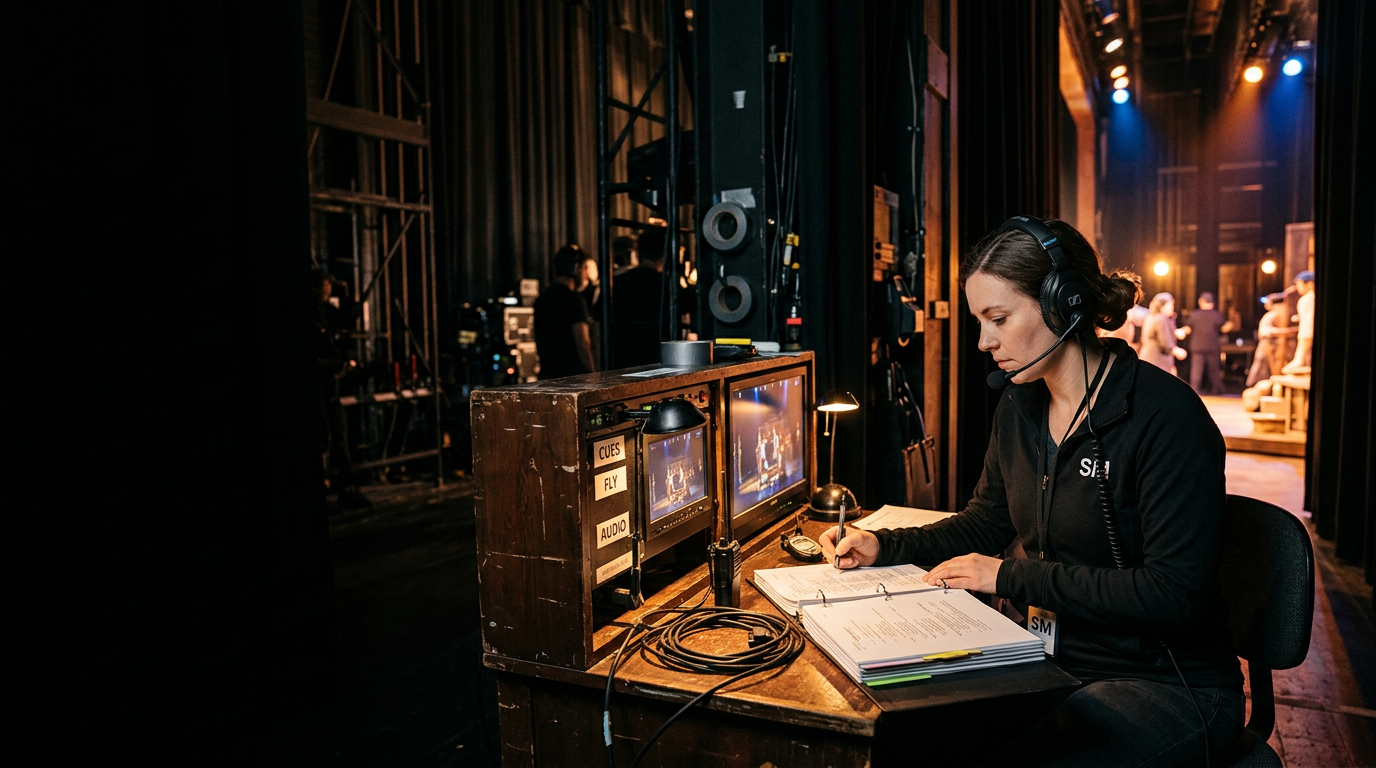
In the high-stakes environment of live entertainment, the gap between a creative vision and a successful performance is bridged by disciplined operational oversight. This article defines the stage manager’s role as the central nervous system of a production, outlining the specific technical competencies and leadership frameworks required to maintain artistic integrity while mitigating fiscal and physical risk.
The Dual Mandate: Process vs. Execution
The stage manager (SM) is unique among production roles because their responsibilities shift entirely between the pre-production phase and the performance run. Unlike a director or a designer, whose primary work is front-loaded, an SM is responsible for the entire lifecycle of the show.
The Developmental Phase
During rehearsals, the SM is the documentation lead. They are responsible for capturing blocking, tracking script revisions, and maintaining the prompt book, which serves as the legal and operational record of the production. Their primary goal here is information flow. Every department (lighting, sound, wardrobe, props) relies on the SM to communicate changes in real-time.
The Performance Phase
Once the show moves into tech and previews, the SM transitions into a decision-maker. They are the sole individual with the authority to "call" the show, synchronizing hundreds of automated, manual, and human cues. In this phase, the SM is less of a secretary and more of an air traffic controller, managing safety protocols and ensuring the consistency of the "gold standard" performance.
Mastery of Production Documentation
Expert stage management relies on specific, standardized documentation. Standardized templates prevent information silos and ensure that if an SM is incapacitated, a sub can step in and run the show with minimal friction.
- The Prompt Book: This is the master "bible." It must contain the current script, the calling script (with precise cue placements), contact sheets, blocking notes, and an emergency procedure manual.
- Daily Rehearsal Reports: This is the primary communication tool for the production team. An expert report does not just list what happened; it highlights actionable "notes" for specific departments.
- Bad Note: "The chair broke."
- Professional Note: "Props: The SL wooden armchair (Prop #42) suffered a structural failure in Act 1. Needs reinforcement or replacement before 10:00 AM rehearsal tomorrow."
- Performance Reports: Post-show, the SM documents every technical glitch, timing variance, or cast injury. This data is critical for producers to track wear and tear on equipment and personnel.
Strategic Production Scheduling
A common failure point in entertainment operations is a disconnect between the creative goals and the clock. Effective production scheduling for live entertainment is the SM’s most powerful tool for protecting the budget and the crew’s morale.
The Rule of the "Buffer"
In any technical rehearsal schedule, an expert SM builds in a 10% time buffer. If a transition is estimated to take 20 minutes to tech, the schedule should allocate 22 to 24 minutes. This prevents the "compounding delay" effect, where a minor sound issue at 1:00 PM results in expensive union overtime by 6:00 PM.
Managing Human Capital
The SM must navigate various labor regulations (such as AEA, IATSE, or local labor laws). Scheduling is not just about the show’s needs; it is about managing "dark time" and required rest periods. A failure to schedule a meal break correctly is not just a logistical error; it is a financial penalty that hits the production's bottom line.
Incident Command and High-Pressure Decision Making
The stage manager is the designated authority during a mid-show crisis. While the producer handles the "why" and the director handles the "what," the SM handles the "now."
The "Hold" vs. The "Stop"
Decision rules must be established before the first audience member enters the building:
- A Technical Hold: Initiated when a scenic element or effect fails but no immediate danger is present. The SM pauses the action, communicates with the audience if necessary, and coordinates a quick fix.
- An Emergency Stop: Initiated when life safety is at risk (e.g., a performer is injured, a fire alarm triggers, or an automated bridge fails to lock). In this scenario, the SM must have the confidence to "kill" the show immediately, regardless of the artistic momentum.
Communication Protocols
During a crisis, the SM uses a "closed-loop" communication style.
- SM: "Deck sound, please check the wireless pack on Lead Actor."
- Deck Sound: "Checking Lead Actor's pack."
- Deck Sound: "Pack replaced. Lead Actor is hot."
- SM: "Copy that."
This eliminates ambiguity and ensures that every command is heard and executed.
Maintaining the Creative Vision (The Artistic Custodian)
In long-running residencies or touring shows, the director often leaves after the opening night. At this point, the stage manager becomes the artistic custodian. Their job is to prevent "performance creep," where actors begin changing lines or tech cues drift away from the original design.
The Maintenance Rehearsal
Strategic stage managers schedule regular "brush-up" or "maintenance" rehearsals. These are not for rebuilding the show, but for tightening the timing. If the "show-stop" duration for a scene change has increased by five seconds over a month, the SM must identify the root cause—be it a lazy prop hand-off or a mechanical gear issue—and correct it.
Giving Notes to Talent
Giving notes is a delicate operational skill. An expert SM avoids subjective critiques ("I didn't like your energy") and focuses on objective deviations from the established blocking or pacing ("In Act 2, your cross to downstage right happened four beats early, which outpaced the lighting wash").
Bridging the Gap Between Technical and Management Roles
In contemporary live entertainment, the SM role often overlaps with production management. This is especially true in themed entertainment or corporate activations where a dedicated PM might be overseeing multiple venues.
The SM must understand the basics of every department's workflow. This includes:
- Automation: Understanding the "dead-man's switch" and the logic of cue triggers.
- Wardrobe: Knowing the duration required for a "quick change" to ensure the script allows enough time.
- Production Scheduling: Utilizing tools designed for production scheduling for live entertainment to ensure that load-ins, sound checks, and rehearsals happen in a logical order that maximizes labor efficiency.
The Financial Impact of the Role
Producers must view the stage manager as an ROI-protector. A disorganized SM leads to:
- Overtime Costs: Poorly timed rehearsals result in staggering labor "penalties."
- Workplace Injuries: Lack of clear safety protocols leads to worker's compensation claims and show cancellations.
- Equipment Damage: If cues are called with imprecise timing, specialized scenic elements or pyrotechnics can be damaged.
Conversely, a top-tier SM operates with a focus on "show readiness." They ensure that the asset (the production) is ready to generate revenue every single night at the highest possible quality.
Where Rox Teddy Fits
Rox Teddy provides the specialized operational support and staffing solutions that allow stage managers to focus on the stage rather than the spreadsheet. By streamlining the logistical and administrative burdens of live production, we ensure your leadership team has the headspace to execute a flawless performance.
Expert stage management is the difference between a controlled production and a chaotic one.