
Backstage Access Best Practices
Managing backstage access is a constant friction point between the need for highlevel security and the operational necessity of fluid movement during a highstakes production. Po...
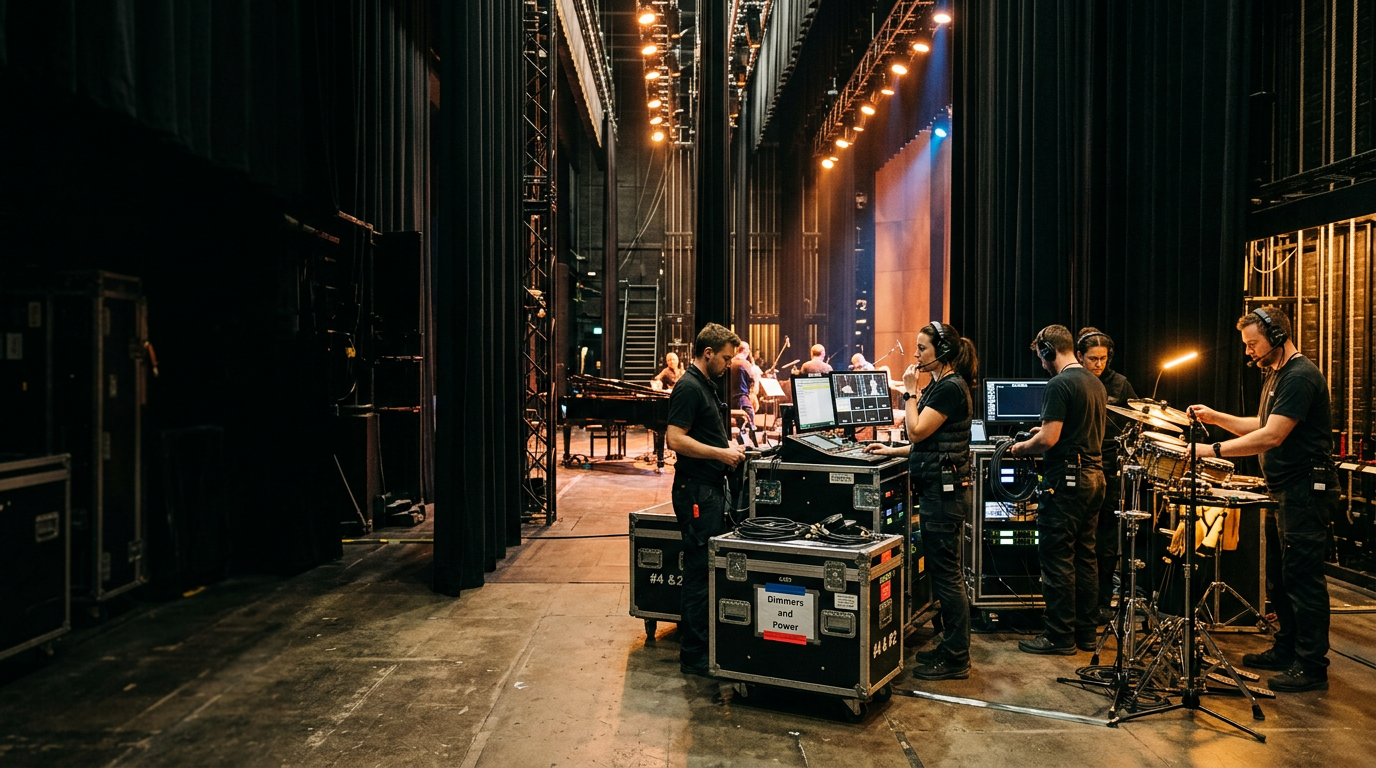
Managing backstage access is a constant friction point between the need for high-level security and the operational necessity of fluid movement during a high-stakes production. Poorly managed ingress results in "credential creep," where unauthorized personnel compromise safety and artist privacy. This guide outlines the rigorous protocols required to maintain a secure, professional backstage environment while ensuring production staff can perform their roles without interference.
The Hierarchy of Access: Defining Your Zone Strategy
Effective backstage management begins with spatial zoning. You cannot treat the entire "back of house" as a single entity. Secure venues must divide the space into distinct zones with escalating levels of clearance.
Zone 1: General Backstage
This includes the production office corridors, catering, and general storage. Access is typically granted to venue staff, local crew, and lower-level touring personnel.
Zone 2: The Production Core
This encompasses the wings, technical booths, and stage management decks. Access here must be restricted to "working personnel" only. During a performance, even high-level executives should be discouraged from these zones unless they have a direct operational role.
Zone 3: Private & High-Security Areas
Dressing rooms, green rooms, and quick-change booths fall into this category. Access is strictly limited to the artist, their immediate team, and essential wardrobe or management staff.
For a detailed breakdown of how to categorize these zones on a physical pass, refer to our guide on backstage credential levels explained.
Credential Integrity and Verification
A badge is only a security tool if it is difficult to forge and easy to verify at a glance. Generic "All Access" sticky passes are the primary cause of security failures in live entertainment.
Design Protocols
- Color Coding: Use high-contrast colors to differentiate between daily local crew, touring staff, and VIPs. If a security guard can’t identify a credential from ten feet away, the design has failed.
- Date and Show Specificity: For multi-day residencies or tours, change the primary color or a specific "key of the day" icon every 24 hours.
- Holographic or UV Elements: To prevent duplication via high-end color printers, use credentials with reflective foils or UV-reactive inks that can be verified with a simple blacklight at the stage door.
The "No Lanyard, No Entry" Rule
Enforcement must be absolute. If a Production Manager allows a VIP to walk through without a visible credential because "everyone knows who they are," the integrity of the entire security team is undermined. Every person, from the Lead Actor to the Venue General Manager, must display their credentials until they are in their specific work zone.
The Stage Door and Ingress Management
The stage door is your primary point of failure. It must be staffed by personnel who are not only trained in security but also in the specific nuances of production hierarchy.
Security Staff Training
Security personnel must be briefed on the specific tour or production culture. They should be provided with a "Picture Board" of key executives and talent who may arrive without their physical badge on day one, though this should be a temporary exception.
Daily Sign-In and Assets
Every person entering the building should sign in, even if they have a permanent tour badge. This provides an accurate manifest in the event of a fire or emergency evacuation.
- Asset Tracking: Use the stage door as the distribution point for radios, keys, and specialized equipment. Exchange a physical credential or ID for these assets to ensure they are returned at the end of the shift.
- Guest Lists: All guest passes must be pre-approved by the Company Manager or Tour Director by a hard cutoff time (e.g., two hours before doors). No exceptions should be made for "walk-up" guests at the stage door.
Operational Readiness and Safety Sweeps
Backstage security is not just about keeping people out; it is about ensuring the space is safe for those allowed in. This requires a systematic check of the physical environment before the house opens.
Pre-Show Sweep Procedures
Sixty minutes before "half-hour," the Stage Manager or Head Carpenter should conduct a walkthrough of all Zone 2 and Zone 3 areas.
- Check for Trip Hazards: Ensure all cable runs are matted and taped.
- Verify Lighting: Work lights should be transitioned to "blue lights" or show-mode lighting.
- Clear Egress: Ensure all fire exits are unobstructed.
- Secure Sensitive Equipment: Check that any pyrotechnics or automation controls are attended or locked.
To ensure your team hits every mark, utilize a pre-show backstage readiness template to standardize these checks across different venues.
Managing External Vendors and VIPs
Third-party vendors (catering, equipment repair, florists) and VIP "meet-and-greet" guests represent the highest risk to backstage operations.
Vendor Escorts
No external vendor should ever be given an unaccompanied "All Access" pass. If a vendor needs to work in Zone 2 or Zone 3, they must be issued a temporary "Escort Required" badge and be shadowed by a member of the venue staff or production team.
VIP and Meet-and-Greet Logistics
If your production includes a VIP experience, keep it physically separated from the working backstage areas.
- The "Clean Room" Approach: Designate a specific room near the stage door or green room for guests. Move the artist to the guests, rather than allowing guests to roam through the wings or hallways.
- Time Boxing: VIP access should have a definitive start and end time. Once the window is closed, security should "sweep" the area to ensure all non-essential personnel have returned to the front of house.
Communication Silos and Conflict Resolution
A common point of friction occurs when security stops a high-ranking member of the production who has forgotten their badge. This often leads to verbal altercations that distract from actual security threats.
Resolution Protocol
- The "Stand-Off" Area: Create a designated space near the security checkpoint where "unverified" individuals must wait while their status is checked. This prevents a "logjam" at the door.
- Radio Channel 1: Ensure the Stage Door, Security Lead, and Company Manager are on a dedicated security channel.
- The Final Say: Clearly define who has the ultimate authority to grant access. Usually, this is the Company Manager or the Tour Manager. If they authorize entry, the security guard must document it and allow the person through without further delay.
Emergency Egress and Accountability
In an emergency, the priority shifts from keeping people out to getting everyone out.
The Muster Point
Every backstage credential should have the location of the "Muster Point" or "Assembly Area" printed on the back. When the alarm sounds, security's role transitions to ensuring no one enters the building while the Stage Manager uses the sign-in sheet to account for all staff and performers.
Redundant Accountability
In high-tech environments, digital scanning of credentials provides a real-time manifest of who is in the building. However, always maintain a physical paper sign-in log at the stage door as a low-tech redundancy in case of power failure or network issues.
Where Rox Teddy fits
Rox Teddy provides the operational infrastructure that bridges the gap between production planning and on-site execution. By streamlining the way you manage personnel schedules and logistical documentation, our tools help your team maintain clear communication and strict adherence to security protocols.
A secure backstage is a professional backstage; by implementing these rigorous standards, you protect your talent, your crew, and the integrity of your production.