
Touring Production Communication Systems
In touring production, the primary friction point isn't technical failure or talent fatigue; it is the erosion of information integrity over distance and time. This guide outlin...
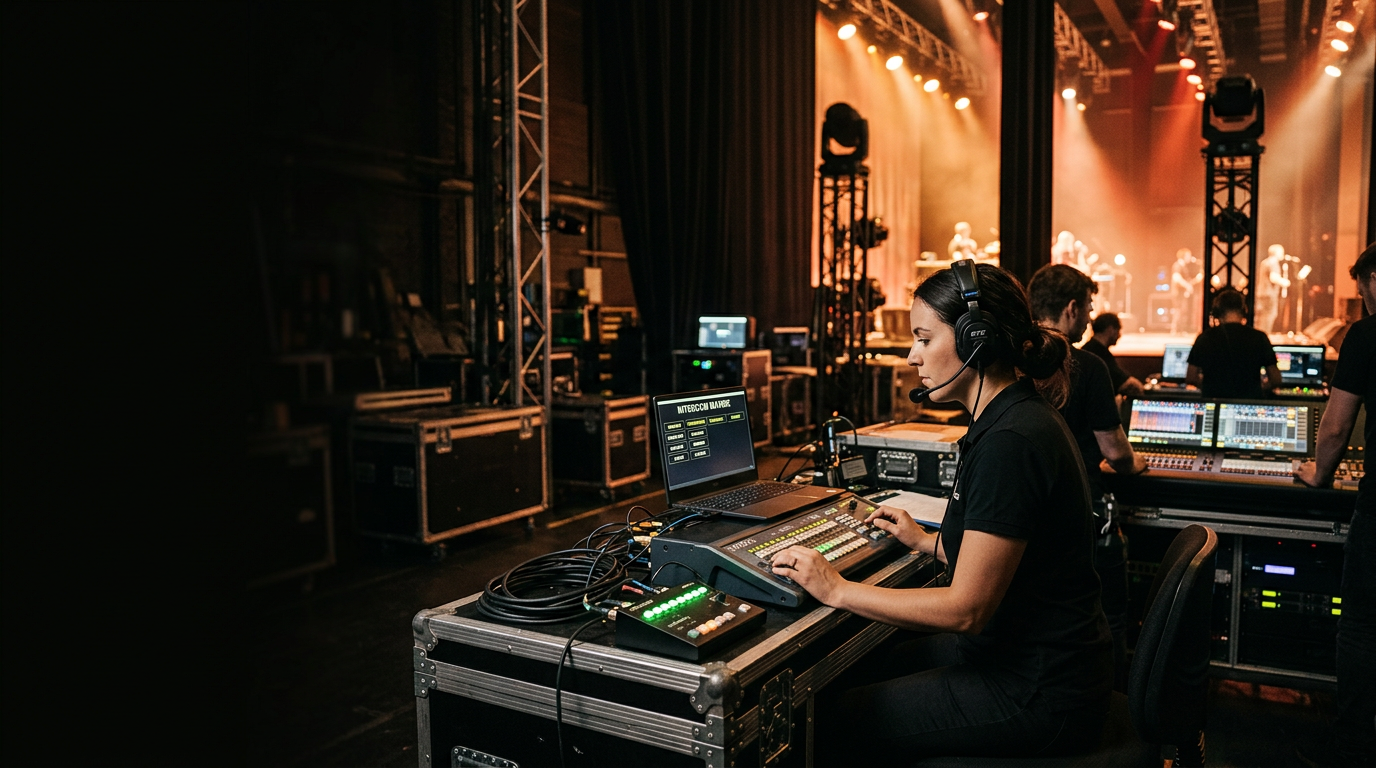
In touring production, the primary friction point isn't technical failure or talent fatigue; it is the erosion of information integrity over distance and time. This guide outlines the infrastructure and protocols required to synchronize company management, technical departments, and local venues to ensure seamless tour logistics.
The Hierarchy of Communication Infrastructure
A touring production requires three distinct layers of communication, each serving a specific speed and security requirement. Attempting to force all information through a single channel, such as email or a chat app, leads to operational bottlenecks.
1. The Real-Time Layer (Intercom and Radios)
During load-in, performance, and load-out, communication must be instantaneous. Digital matrix intercom systems (like Riedel or Clear-Com) are the standard for technical cues. However, from an operations perspective, the "Radio Protocol" is where efficiency is won or lost.
- The 5-Second Rule: If a message takes longer than five seconds to transmit, it belongs on a phone call or a text thread, not a radio channel.
- Channel Segmentation: Separate channels for Tech, Front of House (FOH), and Management are mandatory to prevent "chatter fatigue" among crew members who need to hear cues.
2. The Tactical Layer (Messaging and Group Chats)
This layer handles day-of-show adjustments, such as bus call changes or catering delays. While WhatsApp and Slack are common, they lack the "read receipt" accountability required for safety-critical information.
- Decision Rule: Use a dedicated production app rather than personal SMS. This ensures that when a crew member finishes their contract, they are instantly removed from the data stream, maintaining security.
3. The Institutional Layer (Cloud Storage and Document Management)
This is the "Source of Truth" for tour logistics. It includes tech riders, insurance certificates, and visa documents. Platforms like Dropbox or specialized production software must be structured with strict naming conventions (e.g., YYYY-MM-DD_Venue_City_TechnicalRider) to remain searchable under pressure.
Formalizing the Flow of Information
Information in a touring environment must be pushed to the recipient, not pulled by them. Expecting a tired performer to "check the portal" for their schedule is a recipe for missed calls.
Performer and Crew Availability
Managing a moving roster requires a centralized system for tracking leaves of absence, sick days, and physical therapy appointments. Utilizing a dedicated process for performer availability tracking ensures that Company Managers aren't cross-referencing three different spreadsheets to find out who is cleared for the 2:00 PM matinee.
The Daily Call Sheet
The Daily Call is the legal and operational heartbeat of the tour. It must be consistent in format and delivery time.
- Distribution Timing: Call sheets should be distributed no later than 10:00 PM the night prior, or two hours after the final curtain, whichever is later.
- Hard Data Requirements: Every call sheet must include the venue address (with a dropped pin for the stage door), the nearest urgent care clinic, weather forecasts for travel days, and the "Daily Essential" (the one thing everyone must know for that specific 24-hour period).
To ensure no one misses a change in schedule, teams should implement a standardized daily call sheet distribution SOP that includes a secondary verification step for "pushed" calls or travel delays.
Logistics Coordination Between Company and Production Management
The friction between the "Company" side (people, travel, payroll) and the "Production" side (freight, gear, labor) is usually caused by a lack of shared visibility.
The Master Tour Schedule
The Master Schedule is not a document; it is a live database. It should include:
- Freight Profiles: Expected arrival times for trucks.
- Labor Calls: Local IATSE or venue crew start/end times.
- Housing Grid: Hotel check-in/out times and shuttle loops.
Cross-Departmental Verification
A weekly "Operations Sync" should occur via video call or in-person 48 hours before a city jump. The Production Manager and Company Manager must review the upcoming venue’s quirks, such as restricted loading dock hours or specific COVID-19/health protocols that differ from the current city. If the logistics for the next "stop" aren't locked 48 hours out, the risk of a "dark" day increases exponentially.
Vendor and Venue Communication Protocols
External communication requires a different level of formality than internal chatter. Professionalism in external comms directly impacts the level of service a tour receives from local venues.
The Advance Process
Advancing a show is the act of "pre-solving" problems. This should follow a strict timeline:
- Initial Contact (8 Weeks Out): Distribution of the technical rider and preliminary schedule.
- The Logistics Audit (4 Weeks Out): Confirmation of loading dock dimensions, shore power availability, and dressing room assignments.
- The Final Advance (1 Week Out): Confirmation of local crew numbers and security protocols.
Dealing with On-Site Logistics Failures
When a vendor fails to deliver or a venue doesn't meet the rider requirements, the communication must be documented immediately. A "Tour Incident Report" (TIR) should be filed in the institutional layer. This report serves as evidence for contract negotiations or insurance claims and prevents "he-said, she-said" disputes during settlement.
Crisis Communication and Emergency Response
In a touring environment, a crisis can range from a broken bus on a mountain pass to a medical emergency mid-performance. Without a pre-defined communication chain, panic takes over.
The "Chain of Command" Tree
Every tour must have a printed, laminated card for every department head that lists the emergency contact tree.
- Level 1 (Internal): Stage Manager calls a "Hold" or "Stop."
- Level 2 (Leadership): Company Manager and Production Manager assess the situation.
- Level 3 (External): Stakeholders, Producers, and Emergency Services are notified.
Dark-Site Protocols
For high-profile tours, management should have a "Dark-Site" or a pre-drafted set of external statements for various scenarios (cancellations, cast changes, etc.). Having these approved by the producer in advance allows the Company Manager to focus on human logistics rather than drafting press releases during a crisis.
Data Security and Off-Boarding
Touring productions are high-turnover environments. Staff, cast, and local crews rotate frequently. If your communication system relies on personal accounts, your intellectual property and logistical secrets leave with them.
- Centralized Ownership: All accounts (Zoom, Slack, Dropbox) must be owned by the production entity, not an individual manager.
- Revocation Audits: On the first Monday of every month, the Company Manager should audit access lists to remove any personnel no longer on the active roster.
- Digital Archiving: At the end of a tour or a leg, the entire institutional layer should be "frozen" and archived. This provides a blueprint for future remounts or "bus and truck" versions of the show.
Optimizing for Efficiency
The goal of a communication system is to reduce the "Cognitive Load" on the touring staff. When the system works, the crew doesn't have to think about how to get information; they simply receive it. This leads to higher morale, fewer safety incidents, and a more profitable tour.
Where Rox Teddy fits
Rox Teddy provides the specialized administrative support that touring productions need to maintain these systems without overtaxing their on-site managers. By handling the heavy lifting of data entry, schedule updates, and vendor coordination, we ensure your leadership stays focused on the stage.
Effective communication is the difference between a tour that thrives on the road and one that merely survives it.