
How to Coordinate Large Performer Casts
Coordinating a large performer cast is a highstakes logistics exercise where the margin for error shrinks as the ensemble grows. Managing fifty or more artists requires transiti...
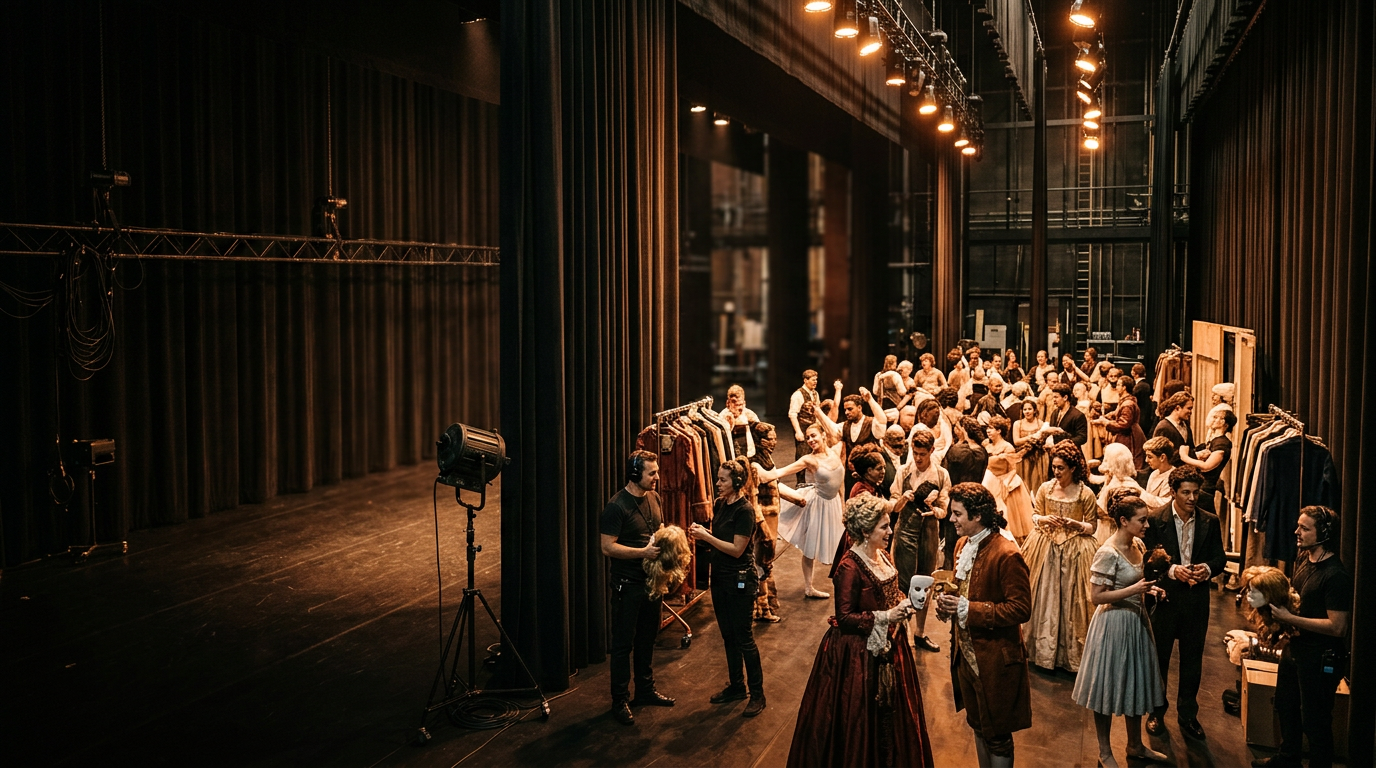
Coordinating a large performer cast is a high-stakes logistics exercise where the margin for error shrinks as the ensemble grows. Managing fifty or more artists requires transitioning from person-to-person communication to rigorous, scalable systems that ensure safety, precision, and morale. This guide provides the operational framework needed to synchronize massive casts without compromising the artistic integrity of the production.
Establishing the Communication Hierarchy
When dealing with a massive ensemble, direct access to the Stage Manager or Production Manager must be filtered through a clear hierarchy. Attempting to manage sixty individuals through a single group chat or email thread is a recipe for missed cues and administrative burnout.
The Pod System
Divide the cast into "Pods" based on their function or track. For example, in a large-scale musical, you might have the Principal Pod, the Dance Ensemble Pod, and the Singer/Swing Pod. Assign a Captain to each pod—typically a veteran performer or a dance captain. These individuals serve as the first point of contact for routine questions and help disseminate information quickly during rehearsals.
Formal Information Distribution
Standardize how information flows. Use a centralized digital callboard or a dedicated production management app. Do not rely on verbal announcements made in a crowded rehearsal hall; if it is not in writing in the central repository, it does not exist. Every update should follow a consistent template: What changed, who it affects, and what the deadline for acknowledgment is.
Mastering Large-Scale Scheduling and Logistics
The complexity of scheduling performers for a live show increases exponentially with cast size. You are no longer just managing time; you are managing space, fatigue, and technical dependencies.
Staggered Calls
Never call a fifty-person cast at the same time unless you are doing a full run-through. Stagger calls to respect the performers' time and to manage the density of the backstage area.
- Tech/Wardrobe Call: 90 minutes before stage time.
- Fight/Lift Call: 60 minutes before stage time.
- Full Company Meeting: 30 minutes before stage time.
The "Dead Zone" Rule
On large sets, the distance between the dressing room and the stage can be significant. Establish "Dead Zones"—areas where performers must be present ten minutes before their cue. This allows the stage management team to verify the presence of the entire ensemble visually before the sequence begins, preventing last-minute scrambles for a missing ensemble member.
Managing Swings and Understudies
In large casts, the volume of tracks is too high for the Stage Manager to track manually during a show. Utilize a "Track Mapping" spreadsheet that visualizes every performer’s location for every minute of the show. When a swing goes on, they don’t just take over a "role"; they inhabit a specific "track" that includes preset locations, costume changes, and prop hand-offs.
Traffic Flow and Backstage Spatial Management
A large cast creates physical bottlenecks that can jeopardize the pacing of a show and the safety of the crew. Successful ensemble management requires choreographing the backstage movement as strictly as the onstage movement.
Directional Traffic Lanes
In high-occupancy areas like the wings or quick-change booths, implement one-way traffic lanes. Use gaff tape to mark "Active Zones" (where performers move) and "Static Zones" (where props or set pieces live). If a performer is not in an active transition, they must remain in a designated "Holding Zone" to keep the wings clear for the entertainment crew scheduling checklist tasks, such as set piece movements or rail cues.
Quick-Change Stations
Avoid sending forty performers back to the dressing room for a three-minute change. Decentralize your wardrobe operations. Place quick-change booths in the wings, assigned by pod or track. Each station should be labeled with the performer’s name and the specific cue number.
The "Silent Backstage" Protocol
Large casts generate significant ambient noise. Implement a strict "No Talking" rule once performers enter the backstage corridors. Communication should be limited to hand signals or low-frequency headsets for captains. Use a visual cue light system (Red for "Standby," Green for "Go") at every egress point to ensure performers enter the stage in the correct order.
Health, Safety, and Ensemble Morale
The "ensemble" is the engine of a large production. If the engine overheats due to poor management, the entire show suffers. Operations managers must prioritize the physical and mental stamina of the group.
Fatigue Monitoring
Large casts often perform repetitive, high-impact movements. Monitor the "Load" on your performers. If the schedule calls for three "10-out-of-12" rehearsal days in a row, the operations team must ensure that hydration stations and physical therapy resources are scaled up accordingly.
Accountability and Check-ins
With a large group, it is easy for individuals to feel invisible. This lead to a drop in discipline. Use a digital check-in system where performers scan a QR code or tap a tablet upon arrival. This provides real-time data to the Stage Manager without requiring a manual roll call.
Conflict Resolution for Large Groups
In a large ensemble, friction is inevitable. Establish a "Chain of Command" for grievances.
- Tier 1: Captains (Peer-to-peer resolution).
- Tier 2: Company Manager (Logistical or personal issues).
- Tier 3: Production Manager/Producer (Contractual or safety escalations).
Clear boundaries prevent the Production Manager from being bogged down by minor interpersonal issues while ensuring that serious safety concerns reach the top of the chain immediately.
Technical Integration and Rehearsal Efficiency
Integrating a large cast into a technical environment is the most dangerous phase of production. The sheer number of moving parts—both human and mechanical—requires a disciplined approach to the tech process.
Dry Tech vs. Wet Tech
Never bring a large cast onto the stage until the crew has executed every move "dry" (without performers). Once the cast is added, move in "slow-motion" for the first iteration of any large ensemble sequence. This allows the performers to find their sightlines and identify potential collisions with set pieces or other dancers before moving at full show tempo.
Use of Video Monitoring
In large venues, many performers will be unable to see the conductor or the stage manager. Install "God Mics" (talkback systems) and high-definition monitors in every wing and holding area. Performers should be able to see the stage action and the conductor from any point in the backstage area to maintain their timing.
The Paper Tech Requirement
Before the first day of on-stage rehearsal, the Stage Manager, Technical Director, and Department Heads must conduct a "Paper Tech." They should walk through every cue, identifying which performers are on stage and where the potential bottlenecks will occur. Identify "High Risk" transitions—where a large number of people must move across the stage behind a curtain or through a narrow doorway—and assign extra marshals or "spotters" to those locations.
Data-Driven Performance Reviews
Large cast management benefits from post-show data. Use show reports to track trends. If a particular transition is consistently flagged as "tight" or "messy," it is likely a logistical failure, not a performer failure.
- Quantitative Metrics: Late arrivals, missed cues, wardrobe malfunctions per pod.
- Qualitative Metrics: Performer feedback on wing congestion or floor slipperiness.
Review these metrics weekly with the Pod Captains to make incremental adjustments to the "track mapping" or the backstage layout.
Where Rox Teddy fits
Rox Teddy provides the operational specialized support that production managers need to move from manual spreadsheets to automated, high-precision cast management. Our team assists in building the communication frameworks and scheduling workflows that keep large ensembles synchronized, safe, and on cue. We help you bridge the gap between creative vision and logistical reality.
Effective large cast coordination is a discipline of systems, not just personalities, and mastering these systems ensures the show remains consistent night after night.