
Entertainment Crew Scheduling Checklist
Optimizing an entertainment crew schedule is the difference between a profitable run and a production sidelined by overtime penalties and burnout. This checklist provides a tech...
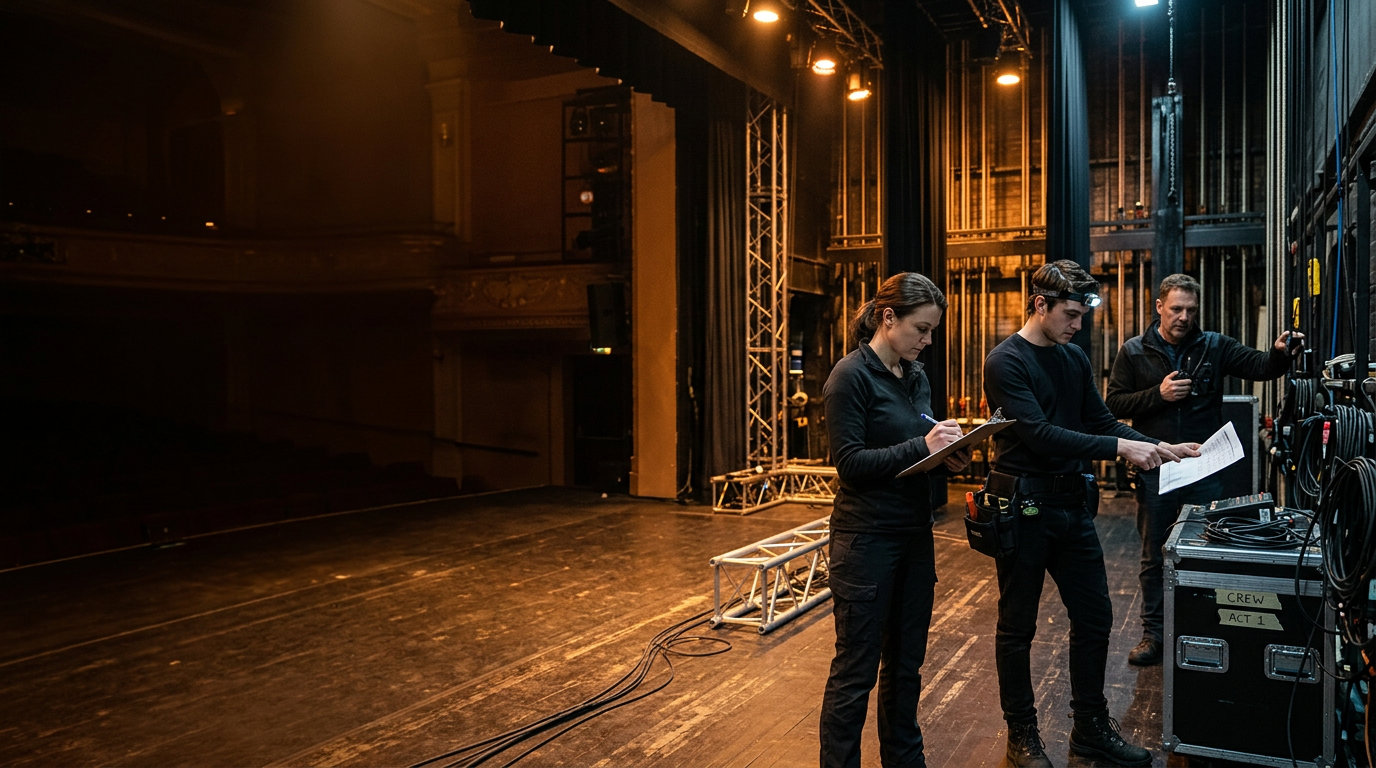
Optimizing an entertainment crew schedule is the difference between a profitable run and a production sidelined by overtime penalties and burnout. This checklist provides a technical framework for building resilient, compliant, and cost-effective schedules across theater, touring, and live events.
Establishing the Production Framework
Before assigning a single stagehand to a shift, you must define the constraints of the production environment. Scheduling in a vacuum leads to "safety-net hiring," where managers over-staff to compensate for poor planning.
Define the Production Phase
Staffing levels fluctuate wildly based on the phase of the project. Your checklist must account for:
- Load-In/Install: High-density labor with specialized rigging and electrical skills.
- Tech/Rehearsal: Long hours with high standby time; requires meal break precision.
- Run of Show: Lean, consistent staffing focused on repeatability and safety.
- Strike/Load-Out: High-intensity, fast-paced transitions often requiring fresh "push" crews.
Audit Venue and Union Contracts
If you are working in a union house (IATSE, USA, or Equity), the contract is your schedule. Review the specific Collective Bargaining Agreement (CBA) for:
- Minimum Calls: Most houses require a 4-hour minimum.
- Meal Windows: Penalties for "encroaching" on a meal break are often double or triple time.
- Turnaround Requirements: Ensure at least 8 to 10 hours between the end of one shift and the start of the next to avoid "infringement" rates.
Analyzing Labor Requirements by Department
A common mistake in crew scheduling is treating "crew" as a monolith. A lighting programmer and a deck hand have different fatigue thresholds and hourly rates.
The Skill-Set Matrix
Map your personnel against the specific needs of the show. A robust production scheduling for live entertainment strategy requires a clear understanding of departmental dependencies.
- Audio: Needs quiet time for tuning; cannot work simultaneously with loud carpentry.
- Automation: Requires clear stage space for move-testing; schedules must be segregated from general foot traffic.
- Wardrobe/Hair: Hours are typically back-loaded (starting later in the day) compared to the electrics crew.
Identifying Key "Linchpin" Positions
Identify the roles that, if absent, stop the entire production. These include the Head Carpenter, the A1, and the Tech Lead. Your schedule must include "shadow" or "cover" plans for these individuals to ensure continuity in the event of illness or emergency.
The Scheduling Workflow: Step-by-Step
Effective stagehand scheduling follows a chronological logic. Use this sequence to build out your master call sheet.
Phase 1: The "Skeleton" Build
Start with the non-negotiables: Curtain times, rehearsal blocks, and truck arrival times. These are the fixed anchors of your schedule.
Phase 2: Layering the Head of Departments (HODs)
Schedule your HODs to arrive 30 to 60 minutes before the "push" or general call. This allows them to walk the stage, review the day's goals, and prepare the workspace so the hourly crew can begin working immediately upon arrival.
Phase 3: Filling the General Call
Apply the following decision rules when assigning staff:
- The 80/20 Rule: 80% of your labor should be "General Stagehands," while 20% should be "Specialized" (Welders, Programmers, Riggers). Mixing these ratios incorrectly leads to overpaying for simple tasks.
- Staggered Starts: Do not bring 40 people in at 8:00 AM if the trucks only have room for 10 people to unload at a time. Stagger the calls in 30 or 60-minute increments to match the workflow.
Managing Breaks and Compliance
In the entertainment industry, the "penalty" system makes poor scheduling expensive. A 15-minute delay in breaking for lunch for a crew of 50 can cost thousands in "Prevailing Rate" penalties.
The Meal Break Strategy
- The "Dark" Stage: Shut down the entire stage for an hour. This is the easiest way to manage compliance but halts all progress.
- Rolling Breaks: Split the crew into "A" and "B" teams. Team A eats from 12:00 to 1:00 while Team B works; they swap at 1:00. This is essential for tight tech schedules where the stage must remain active 24/7.
Tracking Work Hours and Fatigue
Safety is the primary byproduct of a good schedule. Implement these thresholds:
- The 12-Hour Cap: Avoid scheduling any individual for more than 12 hours of active work in a 24-hour period.
- The "Day Off" Rule: In a residency or a long-term install, ensure a 6-on-1-off or 5-on-2-off cadence. Efficiency drops by over 30% after the seventh consecutive day of work.
Communication and Distribution
A schedule is only as good as its delivery. If the crew does not know where to be, the plan has failed.
Centralized Documentation
The "Master Call Sheet" must be the single source of truth. It should include:
- Call Time: When they must be signed in.
- Location: Specific stage, loading dock, or rehearsal hall.
- Attire/PPE: Steel-toes, blacks, or high-vis requirements.
- HOD Contact: Who the crew member reports to upon arrival.
The Feedback Loop
Schedule a 15-minute "Production Meeting" at the end of every day. Use this time with your HODs to adjust the next day’s schedule. If the rigging took longer than expected, you might need to push the "Electrics" call back to avoid paying people to sit in the house while motors are still being hung.
Handling Real-Time Adjustments
No entertainment crew schedule survives contact with reality. Equipment breaks, shipments are delayed, and talent gets stuck in transit.
The Contingency "Float"
Always build a 10% "buffer" into your labor budget. This isn't just for money; it's for time. If you think a task will take 4 hours, schedule 4.5. If you finish early, you can "cut" the crew (respecting minimum call rules), which is better for morale than "adding" four hours of unexpected work at the end of a long day.
Decision Rule: Cut or Keep?
When work finishes early, production managers must decide whether to release the crew.
- Rule: If there is less than 90 minutes remaining in the call and the next task requires a full setup, release the crew. The cost of "resetting" for a 45-minute work block often outweighs the value of the labor.
Final Review Checklist
Before hitting "publish" on your crew schedule, ask these four questions:
- Are there at least 8 hours of rest between all shifts for every individual?
- Does the electrics call time align with when the riggers will have the points high enough to work under?
- Have I accounted for "Walk-In" time? (It takes 15 minutes for 100 people to get through security and get to the stage).
- Are meal penalties explicitly avoided or intentionally budgeted?
Where Rox Teddy fits
Rox Teddy simplifies these complex operational layers by providing a central platform for schedule distribution and crew management. By automating the communication of call times and venue requirements, it reduces the administrative burden on production managers. This ensures your team stays synchronized across every phase of the production lifecycle.
Mastering the entertainment crew schedule is an exercise in logistics, psychology, and financial management. Use this checklist to move away from reactive "firefighting" and toward a proactive, professional production environment.