
How BattleBots Las Vegas Runs a Full-Time Cast with Cascading Swings in Rox Teddy
A look at how the live BattleBots show at the Horseshoe in Las Vegas uses Rox Teddy to schedule a full-time cast across multiple roles, with swing logic that understands when covering one role opens a hole in another.
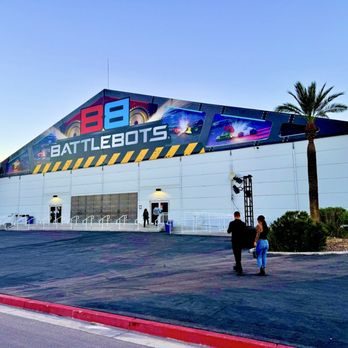
How BattleBots Las Vegas Runs a Full-Time Cast with Cascading Swings
The live BattleBots show in Las Vegas is one of the more demanding scheduling environments a producer can take on. It runs a full-time resident cast, multiple performance roles per show, daily call times, and a roster of swings who are trained to cover several tracks. When one of those swings steps up to cover a primary role, their own slot suddenly needs coverage too. Most scheduling tools treat each role as an isolated assignment and quietly leave that secondary hole for a human to notice. Rox Teddy is built to catch it.
This is a look at how the production uses Rox Teddy day to day, and the specific scheduling problems the platform was designed to solve for a show of this complexity.
The Operational Picture
BattleBots Las Vegas runs a resident cast across a set of distinct performance roles — hosts, fighters, technical performers, and supporting cast — with shows scheduled multiple times per week. Every role has its own skillset requirements, its own call time, and in some cases its own pay configuration. Swings are cross-trained across two or more tracks, and the production cannot afford a missed cue or an empty seat on a paying house.
Before Rox Teddy, coverage decisions lived in a spreadsheet and a group chat. When a primary performer called out, the production manager would mentally walk the chain: if I move Swing A into the host slot, who covers the role Swing A was originally booked for? That mental walk is exactly the kind of thing that gets skipped at 30 minutes to call.
Cascading Swing Logic
The feature the BattleBots production team relies on most is what Rox Teddy calls cascading swing coverage. The platform understands two things at once:
- A swing is a performer who is qualified for a role but is not the primary holder of that slot for the day.
- Reassigning a swing into a primary role creates a new open slot wherever that swing was originally placed.
When a primary performer is marked called out or unavailable, Rox Teddy will surface the best-qualified swings for the empty role. If the producer accepts that recommendation and the swing is already booked elsewhere on the same day, the platform automatically flags the now-vacant secondary slot, scores the remaining performers for it, and prompts the producer to fill it. Swings are scored with a deliberate penalty so the algorithm prefers to keep primaries on their own tracks first and only cascade when it has to.
The practical effect for BattleBots is that the production manager stops being the human cache that remembers every dependency. The schedule itself tracks the chain.
Multi-Role Performers Without the Spreadsheet Gymnastics
A resident cast for a show like BattleBots is not a flat list of names. Some performers are primary on one role and swing on two more. Some are swing-only. Some are seasonal additions who only cover specific tracks. Rox Teddy models that by attaching skillsets directly to performers and to roles, so the system always knows which performer is eligible for which slot.
That eligibility is enforced in every workflow that touches the schedule: auto-assign, manual reassignment, shift swap requests, open shift bids, and the cascading swing flow described above. A performer cannot be quietly dropped into a role they are not trained for, and a producer never has to remember which version of the cross-training matrix is current.
Daily Operations the Production Actually Uses
Beyond the swing logic, a handful of Rox Teddy features map directly to how the BattleBots production runs a show day:
- GPS-validated check-ins at the Horseshoe, so producers know who is on site without making a single phone call.
- Missing check-in alerts that email the production team at call time and again 15 minutes after, listing exactly who has not arrived.
- Per-role call times and pay modes, so hosts, fighters, and technical performers can have different schedules and rate structures inside the same event.
- Shift release and swap requests with admin approval, giving the cast a sanctioned way to ask for time off without anyone losing the audit trail.
- Activity reminders that go out to the right performers at the right time, scoped to the role they are actually performing that day.
What Changed Operationally
The shift the BattleBots production describes is less about any single feature and more about removing a category of risk. Cascading coverage holes used to be a thing the production manager had to remember. Now they are a thing the schedule shows. The producer's attention moves from bookkeeping to judgment calls — which swing should cover, not whether there is a hole to cover at all.
For a resident Las Vegas show with multiple roles per night and a swing pool that is constantly in motion, that change is what makes the operation sustainable across a long run.
Why It Generalizes
The BattleBots use case is unusually demanding, but the underlying pattern is common across resident productions, theatrical runs, and any live show with cross-trained understudies. Anywhere a single coverage move can create a second coverage hole, Rox Teddy's swing logic is doing the same work it does in Las Vegas: tracking the chain so a human does not have to.